

Across Southeast Asia, restaurants and retail chains are digitizing at remarkable speed. Self-ordering kiosks in Bangkok, QR-payment terminals in Kuala Lumpur, smart POS counters in Jakarta and Manila — the touch screen has become the face of the modern store.
For chain operators and the system integrators serving them, choosing displays for hundreds of locations is a different problem from choosing one for a single kiosk. This guide covers what matters when the unit count is high and the downtime tolerance is zero.
Why Southeast Asia Is a Special Environment
Two factors make this region harder on electronics than temperate markets:
- Heat and humidity: kitchens, open-air food courts and semi-outdoor retail push ambient temperatures and moisture far beyond office conditions. Displays need wide-temperature components and proper sealing to avoid condensation behind the glass.
- Infrastructure variation: power quality fluctuates. Screens paired with unstable local power benefit from wide-input power designs and surge protection at the installation level.
A display that works flawlessly in a European demo room can fail within a year in a tropical food court if these are ignored.
The Three Screen Types Every Chain Deploys
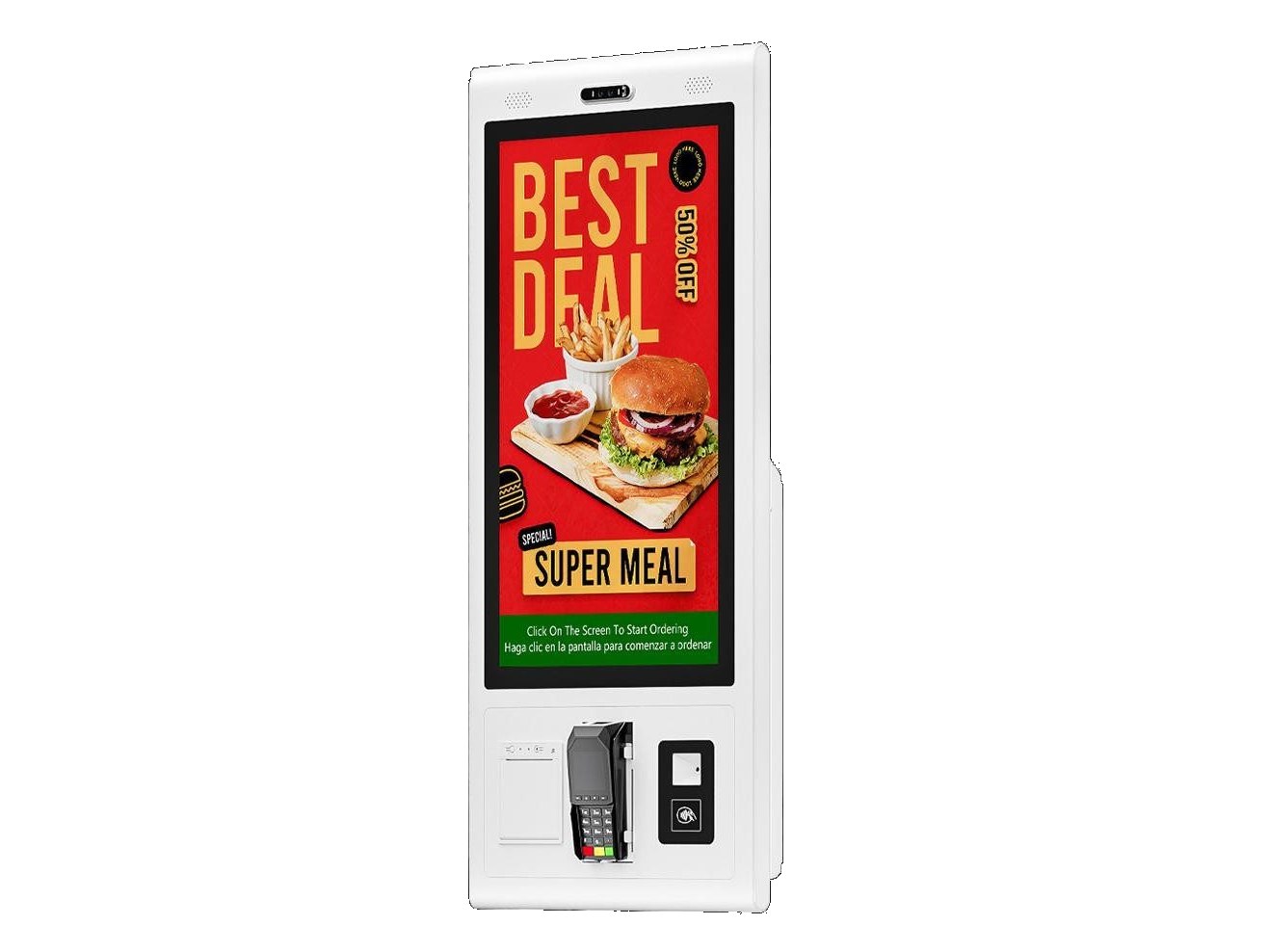
1. Self-ordering kiosks (15.6″–27″). The customer-facing workhorse. Priorities: smooth PCAP touch, bright enough for store lighting (350–500 nits), and a flat glass front that survives daily cleaning with disinfectant. Multi-language UI means bigger touch targets — do not undersize.
2. POS touch terminals (10.1″–15.6″). Staff-facing, used 10–14 hours a day. Priorities: reliability above all, wide viewing angle (staff look from the side), and fanless design to survive greasy air near kitchens.
3. Queue and pickup displays (21.5″–43″). Order status boards and queue screens. These are simple advertising-class displays, but in chains they run continuously — specify industrial panels with 30,000h+ backlights, not consumer TVs.
Hygiene Is Now a Specification, Not a Preference
Post-2020, food-contact environments expect screens to be cleaned aggressively and often. Specify:
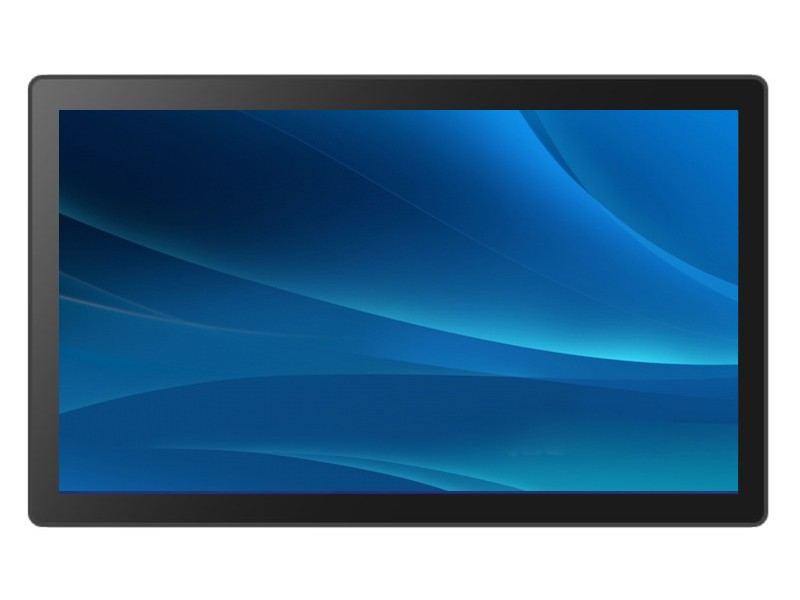
- Fully flat PCAP fronts with no raised bezel where grease and bacteria accumulate
- IP65-rated front surfaces that tolerate direct wet wiping
- Chemically resistant cover glass that survives alcohol-based disinfectants daily
Rollout Strategy for Multi-Store Chains
The chains that succeed treat displays as infrastructure, not procurement:
- Pilot in 2–3 stores for 60–90 days. Test under real conditions — lunch rush, cleaning cycles, power events.
- Lock the mechanical design once. Every store uses the same enclosure and mounting; spare units become interchangeable across the chain.
- Buy 3–5% spare units upfront. A failed screen in a 200-store chain costs more in logistics than in hardware. Spares on the shelf in-country beat any warranty promise.
- Standardize interfaces. Same video input, same touch USB, same power connector across the fleet — your integrator will thank you at store #47.
What to Ask Your Supplier
- Can you support consistent supply over 2–3 years? Chains cannot re-qualify a new display every six months.
- Do you offer CKD/SKD or complete units? Depending on the country, local assembly can change landed cost significantly under RCEP rules.
- Will you hold safety stock for rollout schedules?
FAQ
Q1: Are consumer tablets good enough for restaurant ordering?
For a single café, maybe. For a chain, no — consumer tablets lack VESA mounting, industrial backlights, long-term supply guarantees, and their batteries become a safety issue in hot kitchens.
Q2: What is the typical lifespan we should budget for?
With industrial touch displays, plan for 5–7 years. Budget replacement cycles for consumer-grade hardware at 2–3 years, plus higher failure rates in between.
Q3: Can one supplier cover kiosks, POS and queue displays together?
Yes — consolidating with one factory simplifies support and spares. Look for a manufacturer covering open frame monitors, touch panel PCs and advertising displays under one roof.
Planning a multi-store rollout in Southeast Asia? Send us your store format and timeline — we will propose a display package with pilot units. Read our Touch Displays for Southeast Asia: A Practical Sourcing Guide for more regional sourcing advice.